
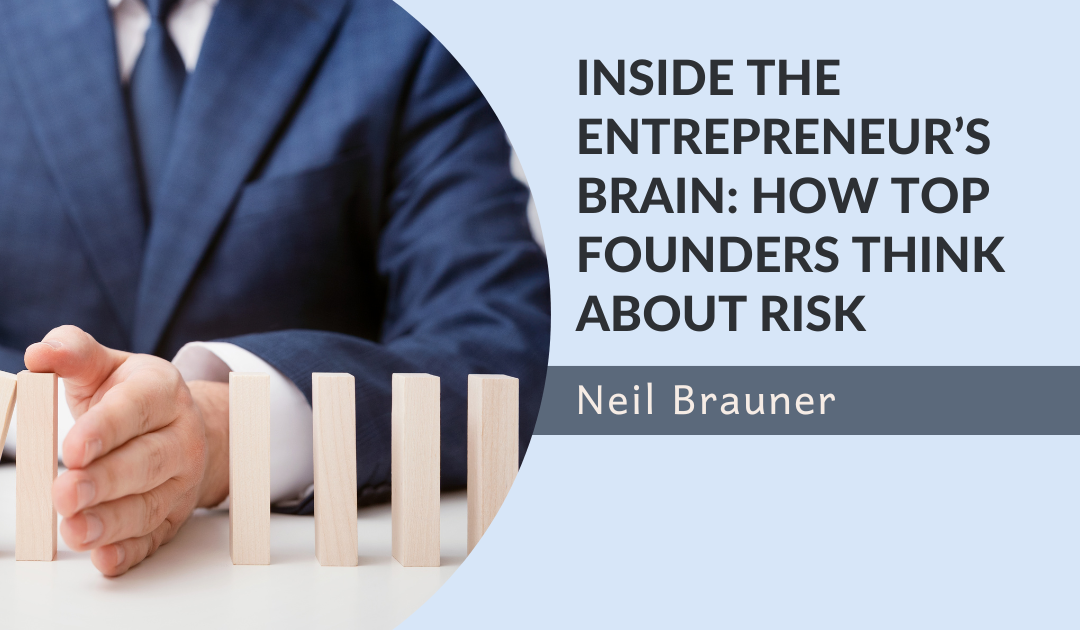
Risk is often seen as the defining trait of entrepreneurs. From the outside, founders appear bold and sometimes reckless, leaving stable careers, investing personal savings, and committing years of effort to uncertain outcomes. In reality, top entrepreneurs are not gamblers. They are disciplined risk managers who understand uncertainty and know how to work within it.
The way successful founders think about risk explains why some thrive under pressure while others struggle. The difference is not in avoiding risk, but in how it is framed, analyzed, and acted upon.
Founders View Risk as Manageable, Not Paralyzing
Most people associate risk with potential loss and instability. Entrepreneurs accept risk as a constant and treat it as something that can be broken down and navigated. Instead of reacting emotionally, they rely on structure, logic, and planning.
This mindset allows founders to stay focused on progress rather than fear. Risk becomes a variable to work with, not a reason to stop moving forward.
Personal Risk and Business Risk Are Kept Separate
One of the most important mental frameworks top founders develop is separating personal identity from business outcomes. Early-stage entrepreneurs often tie their self-worth to their startup’s success. Experienced founders deliberately avoid this trap.
They protect their health, relationships, and financial stability by setting boundaries and defining limits. This creates psychological safety, which in turn enables clearer thinking and better decision-making. When personal survival is not constantly threatened, founders can take smarter and more strategic business risks.
Reducing personal risk increases long-term entrepreneurial resilience.
Risk Is Reduced Through Small, Controlled Experiments
Top entrepreneurs rarely commit to large, irreversible decisions early on. Instead, they reduce uncertainty by running small experiments that generate real-world feedback.
Ideas are validated through early testing, minimum viable products, pilot launches, and rapid iteration. Each experiment answers a specific assumption and lowers uncertainty step by step. Progress is measured by learning speed rather than perfection.
This approach transforms risk into a structured process instead of a single high-stakes gamble.
Decisions Are Made Without Complete Information
Uncertainty is an unavoidable part of building something new. Successful founders understand that complete clarity never arrives. Waiting for perfect information often becomes a greater risk than acting with partial data.
Top entrepreneurs develop comfort with ambiguity and rely on informed judgment. They move forward with sufficient evidence and adjust as new information emerges. Speed, adaptability, and responsiveness become competitive advantages.
Confidence comes not from certainty, but from the ability to course-correct quickly.
Failure Is Treated as Feedback, Not Identity
Failure is an expected part of entrepreneurship, but how it is interpreted makes all the difference. Top founders do not romanticize failure, yet they do not internalize it either.
When something goes wrong, attention shifts to analyzing assumptions, understanding signals, and applying lessons. Emotional attachment to outcomes is replaced by curiosity and learning. This perspective reduces fear-driven decisions and encourages continuous experimentation.
Failure becomes a source of data that strengthens future execution.
Focus Is Placed on Asymmetric Risk
Successful entrepreneurs are drawn to opportunities where the potential upside significantly outweighs the downside. These asymmetric bets allow meaningful progress with limited exposure.
Small experiments, low-cost partnerships, and scalable initiatives are favored because they preserve flexibility while opening the door to significant gains. Losses are survivable, while wins can reshape the trajectory of the business.
This balance allows founders to move forward boldly without reckless exposure.
Emotional Control Strengthens Risk Judgment
Risk is not purely analytical. Emotional regulation plays a major role in decision quality. Top founders build habits that help them stay calm under pressure and avoid reactive behavior.
Practices such as reflection, mentorship, physical health routines, and mental discipline support clear thinking during uncertain moments. A steady emotional state enables consistent execution and prevents panic-driven pivots.
Calm leadership becomes a strategic advantage.
Risk Becomes a Learnable Skill
Entrepreneurial risk-taking is not a personality trait reserved for a few. It is a skill developed over time through experience, pattern recognition, and repeated decision-making.
As founders accumulate knowledge, uncertainty becomes more familiar. Confidence grows from exposure and learning rather than blind optimism. What once felt overwhelming becomes manageable through systems and structure.
Risk evolves from a threat into a tool.
Final Thoughts
Inside the entrepreneur’s brain, risk is approached with intention, discipline, and clarity. It is measured, tested, and managed rather than avoided or ignored.
The most successful founders are not defined by how much risk they take, but by how thoughtfully they take it. By reframing risk as a process instead of a leap of faith, entrepreneurs build resilience, adaptability, and long-term success.